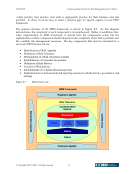
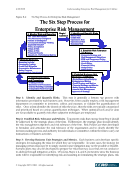
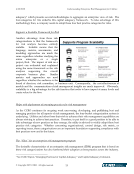
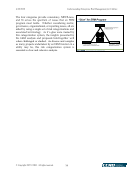
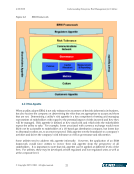
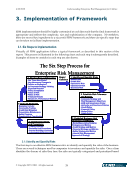
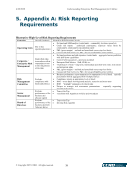
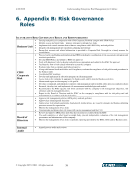
4/20/2020 Understanding Enterprise Risk Management for Utilities © Copyright 2007, CCRO. All rights reserved. v The key benefits of an ERM framework include robust internal processes, governance, controls and communication, and enhanced stakeholder relations and risk awareness. Specifically, ERM addresses stakeholder concerns and aids management because it: • Creates a disciplined and consistent method to identify, communicate and manage risk • Establishes a clear link between strategic business plans and key risks • Aligns risk tolerance from Board through Management to Staff levels • Creates integrated and coordinated approaches to managing risk across all business units • Fulfills lender and credit rating agency requirements • Efficiently allocates spending capital • Addresses higher Board and Officer risk management expectations • Promotes a risk awareness and management culture • Enhances the external view and reputation of the entity and • Leads to better and more informed decision making. In summary, an ERM framework improves understanding of the risks that impact the enterprise and how these may be manifested encourages employees to integrate risk management into their normal activities demonstrates risk management performance to stakeholders enhances confidence that the risk profile is understood and being monitored in accordance with the enterprise’s risk management plan and focuses management attention on key risks. ERM implementations should be highly customized at each firm such that the final framework is appropriate and reflects the complexity, size and sophistication of the company. Nevertheless, there are several key ingredients to a successful ERM framework and there are specific steps that can be taken to facilitate implementation. Virtually all ERM applications follow a typical framework as described in this section of the report. This process is illustrated in the figure E.4.
Purchased by unknown, nofirst nolast
From: CCRO Library (library.ccro.org)