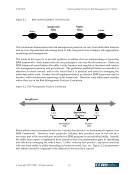
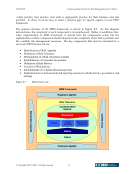
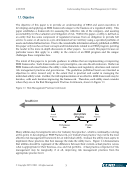
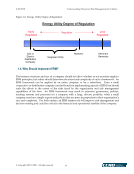
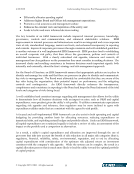
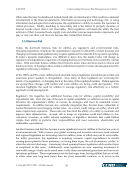
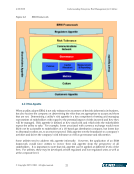
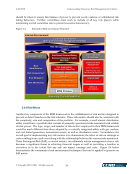
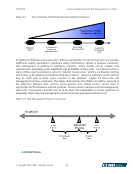
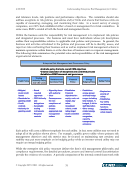
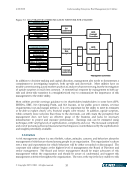
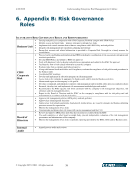
4/20/2020 Understanding Enterprise Risk Management for Utilities © Copyright 2007, CCRO. All rights reserved. 24 should be taken to ensure this balance of power to prevent overly cautious or unhindered risk taking behaviors. Further, committees must work to include of all key role players while minimizing overall committee size to prevent excessive bureaucracy. Figure 2.3: Illustrative Risk Governance Structure 2.4.4. Risk Metrics Another key component of the ERM framework is the establishment of risk metrics designed to prevent or detect breaches in the risk tolerance. These risk metrics should also be consistent with the complexity, size and composition of the portfolio. For example, a small electric distribution utility would have a portfolio that consists of primarily operational risks associated with reliable electric power. The type, scope, and number of risk metrics employed in their ERM framework would be much different than those adopted by a vertically integrated utility with gas, nuclear, and coal fueled generation, transmission assets, as well as distribution assets. Nevertheless, the overall goal of implementing any risk metrics is to demonstrate the effect of risk on earnings or costs resulting from a risk event along with the relationship between the various risks monitored. These Earnings-at-Risk (EaR), or at-risk metrics, can ultimately inform management when a risk becomes a significant threat to achieving financial targets as well as providing a baseline to executives as to the extent that any risk can impact earnings and costs. Figure 2.4 below demonstrates the continuum of risk measurement techniques that can be applied to generate an EaR metric.
Purchased by unknown, nofirst nolast
From: CCRO Library (library.ccro.org)