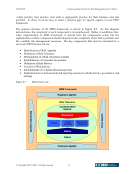
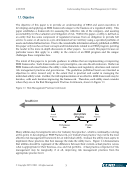
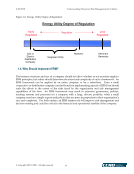
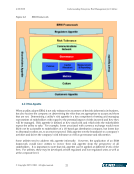
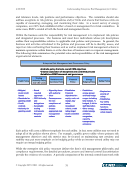
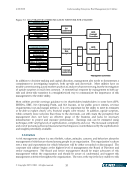
4/20/2020 Understanding Enterprise Risk Management for Utilities © Copyright 2007, CCRO. All rights reserved. 21 renewable plants themselves. These investments are increasing costs and at the same time affording legislators and regulators the ability to exercise retrospection regarding the prudence of these costly investments. Finally, many utilities are also facing the same risks many industries are facing an aging workforce. The knowledge and experience needed to effectively operate a gas or power system is significant, and as more of the workforce retires, the availability of skilled and experienced workers to backfill the void is a growing concern. Partly due to image and partly due to the changing complexion of the workforce, few young workers are looking to the utility industry as a career choice, be it in operations or in the corporate center. This lack of new talent, coupled with an aging workforce, threatens the success of critical business activities. 2.4. The Scope of the Framework The general structure of the ERM framework is shown in Figure 2.2. As this diagram demonstrates, the complexity of each component is not emphasized. Rather, it establishes that, when implementing an ERM framework, it should have the components noted, but the sophistication of these components should depend on the complexity of the firm’s portfolio and the available risk management resources. The key components that must be included for a successful ERM framework are: • Identification of Risk Appetite, • Definition of Risk Tolerance, • Development of a Risk Awareness Culture, • Establishment of Corporate Governance, • Definition of Risk Metrics, • Creation of Risk policies, • Establishment of a Capital Allocation process, and • Implementation of measurement and reporting consistent with the metrics, governance, and strategy.
Purchased by unknown, nofirst nolast
From: CCRO Library (library.ccro.org)