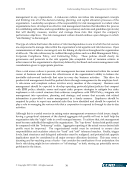
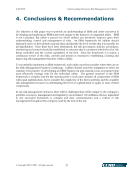
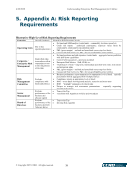
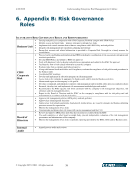
4/20/2020 Understanding Enterprise Risk Management for Utilities © Copyright 2007, CCRO. All rights reserved. 7 2. ERM Framework for Utilities The environment in which electric utilities operate today is very dynamic as the type, scope and frequency of risks faced by utilities have increased dramatically. Constant changes in regulations, technologies, and market structure coupled with increasing production costs, regulatory scrutiny, and commodity price volatility are just a few of the issues presenting significant risk to utilities. Although many of today’s utilities participate in traded commodities markets, and thus must implement common risk management processes, increasingly conservative and standardized practices have made the risks in these areas relatively small when compared to other risks faced by the regulated utility. The practice of ERM for these entities is unique due primarily to the additional complexities utility firms face, such as extensive and diverse physical infrastructures, regional as well as national regulatory authorities, and shareholder or stakeholder perceptions of risk appetite. Specifically, utilities must balance issues such as system reliability, public and employee safety, customer rate stability, generation costs, environmental compliance and stakeholder expectations with volatile commodity markets, regulatory retrospection, ageing infrastructure and changing market rules. More and more often this balancing act is front page news. As the industry recovers from the aftermath of the Enron debacle and increased energy prices, utilities must now also manage these risks and a public image with their regulators, communities, rating agencies, and customers. 2.1. Benefits of ERM An ERM framework is a holistic approach to the assessment and effective management of a company’s entire risk profile. Such a framework can facilitate the identification and assessment of the collective risks affecting a utility and generate company-wide risk management solutions. An ERM framework is a process, not an end result, which views an organization's cumulative risks from a broader perspective than traditional, risk-by-risk assessments and mitigation strategies. That is, a successful ERM framework adopts a portfolio approach to risk, looking at market, credit, operative and business risk issues, as well as their interaction, on a company-wide basis. The end result is a unified perspective of risk and the establishment of a risk-aware culture across the entire company. Additionally, ERM enhances the decision making and planning of a company's management as they better understand the risks of their decisions. Further, an ERM program assuages stakeholder concerns regarding the prudence of management decisions and risk management practices of the firm. Specifically, ERM addresses stakeholder concerns and aids management because it: • Creates a disciplined and consistent method to identify, communicate and manage risk • Establishes a clear link between strategic business plans and key risks • Aligns risk tolerance from Board through Management to Staff levels • Creates integrated and coordinated approaches to managing risk across all business units • Fulfills lender and credit rating agency requirements
Purchased by unknown, nofirst nolast
From: CCRO Library (library.ccro.org)